
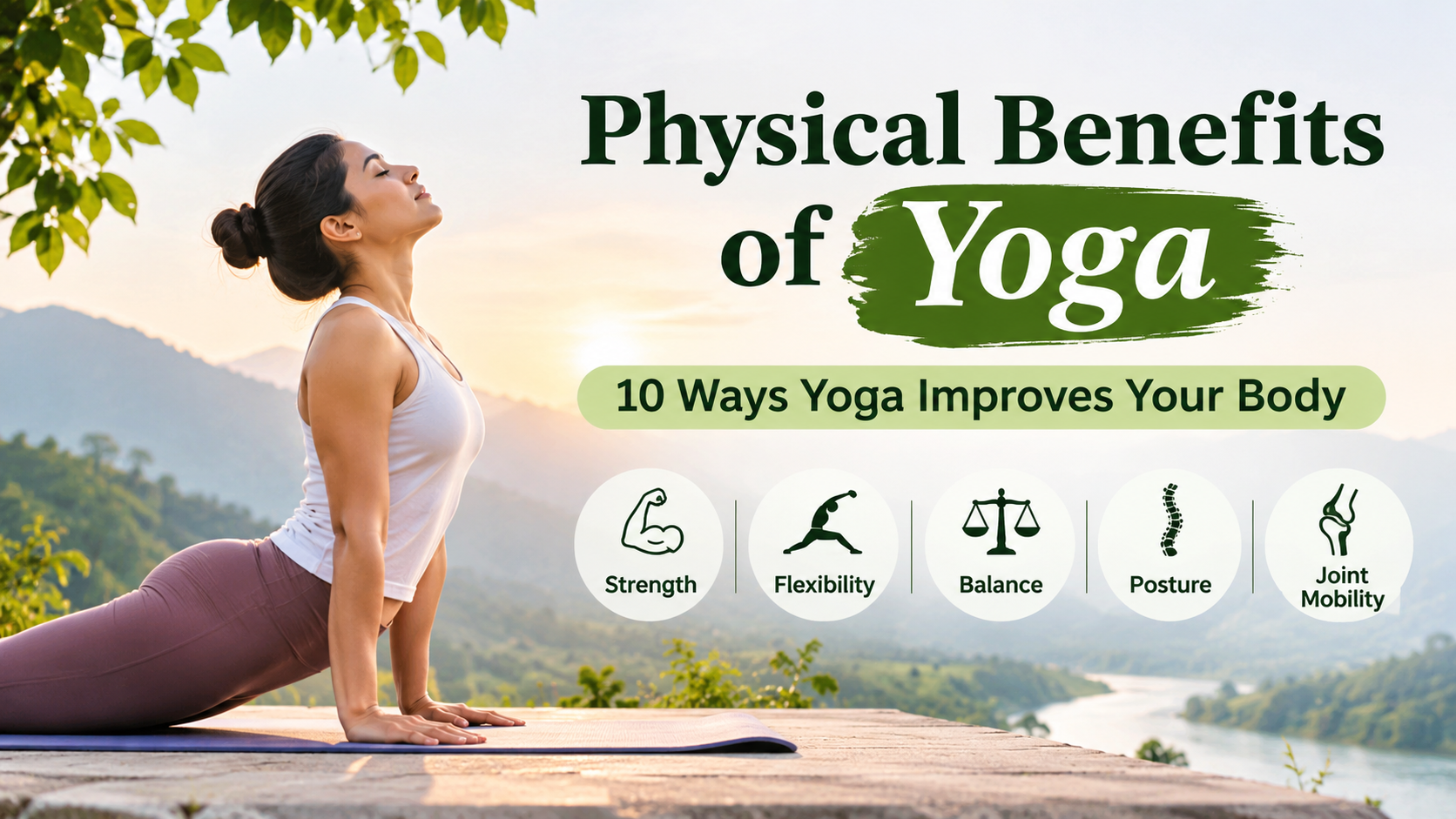
Physical Benefits of Yoga: 10 Ways Yoga Improves Your Body
Yoga is more than a series of stretches. It combines physical postures, controlled movements, balance, and breathing techniques to support different aspects of physical fitness. From improving flexibility to developing better movement control, yoga can be a useful addition to an active lifestyle.
Whether you spend most of your day sitting at a desk, enjoy regular workouts, or want to become more comfortable with everyday movements, yoga offers different ways to work on your physical fitness. You do not need to be naturally flexible or have previous experience to begin.
But what are the actual physical benefits of yoga? Can it help strengthen muscles, improve balance, support joint mobility, and make everyday movements easier?
Let's explore 10 potential physical benefits of yoga, the poses associated with different fitness goals, and practical ways to include yoga in your routine.
What Are the Physical Benefits of Yoga?
Yoga combines stretching, weight-bearing postures, balance exercises, and controlled movements. Depending on the style and intensity, a yoga session can challenge different muscle groups and encourage movement through different ranges of motion.
Research suggests that yoga may support physical functioning, balance, and certain aspects of mobility. It may also offer modest benefits for people with chronic lower back pain. However, results vary according to the individual, practice style, frequency, and level of instruction.
Here are 10 physical benefits associated with regular yoga practice:
- Improved flexibility and range of motion.
- Stronger muscles and muscular endurance.
- Better balance and coordination.
- Improved posture and body awareness.
- Greater joint mobility.
- Support for healthy spinal movement.
- Better functional movement.
- Improved movement control and stability.
- Potential relief from certain types of chronic back discomfort.
- A more consistent and active lifestyle.
10 Important Physical Benefits of Practicing Yoga
1. Yoga Improves Flexibility and Range of Motion
One of the most recognized physical benefits of yoga is improved flexibility. Many yoga postures involve controlled stretching that gradually challenges different muscle groups.
With consistent practice, some people may notice that everyday movements become more comfortable and less restricted.
Yoga may help you:
- Improve movement around the hips, shoulders, and legs.
- Bend forward, reach overhead, and rotate your body more comfortably.
- Develop a greater range of motion through regular, controlled stretching.
Yoga poses that support flexibility:
| Yoga Pose | Main Area |
|---|---|
| Downward-Facing Dog | Hamstrings, calves, and shoulders |
| Standing Forward Bend | Hamstrings |
| Cat-Cow Pose | Spine |
| Butterfly Pose | Inner thighs and hips |
| Low Lunge | Hip flexors |
"Flexibility is not about how far you can stretch; it is about moving with greater comfort and control."
Flexibility develops gradually. Avoid forcing a stretch or comparing your range of motion with another person's.
2. Yoga Builds Muscle Strength and Endurance
Yoga is not only about stretching. Many postures require you to support your body weight, maintain a position, and control your movements. These activities can challenge different muscle groups and help develop muscular strength and endurance.
Depending on the posture, yoga can engage your:
- Core muscles, which contribute to stability and controlled movement.
- Legs and glutes during standing and balancing postures.
- Arms and shoulders during weight-bearing positions.
Yoga poses for strength:
| Yoga Pose | Muscles and Areas Engaged |
|---|---|
| Plank Pose | Core, shoulders, and arms |
| Chair Pose | Thighs and glutes |
| Warrior I | Legs, hips, and shoulders |
| Warrior II | Thighs, hips, and core |
| Bridge Pose | Glutes and core |
"Strength is built through controlled movement, patience, and consistent practice."
Yoga can contribute to muscular fitness, but the level of challenge varies by style and posture. If your goal is substantial muscle growth, combining yoga with progressive resistance training may be more suitable.
3. Yoga Improves Balance and Coordination
Balance plays an important role in everyday physical activities. Walking, climbing stairs, changing direction, and standing on one leg all require coordination and body control.
Yoga includes standing and single-leg postures that challenge your ability to maintain a stable position.
Regular practice may help develop:
- Greater awareness of body positioning.
- Better postural control and coordination.
- Improved stability during different movements.
Yoga poses for balance:
- Tree Pose (Vrikshasana)
- Eagle Pose (Garudasana)
- Warrior III (Virabhadrasana III)
- Extended Hand-to-Big-Toe Pose
Beginners should start with simpler variations and use support when necessary. Balance develops through practice, not by forcing yourself into difficult positions.
4. Yoga Supports Better Posture
Spending long hours sitting at a desk, using a computer, or looking down at a phone can contribute to poor movement habits and postural discomfort.
Yoga encourages awareness of body alignment and controlled movement. Some postures engage the muscles that support the trunk, while others encourage movement through the shoulders, hips, and spine.
Yoga may help you develop greater awareness of:
- Shoulder and pelvic positioning.
- Spinal alignment during sitting and standing.
- Core engagement and controlled movement.
Yoga poses that support postural awareness:
| Pose | Potential Benefit |
|---|---|
| Mountain Pose | Encourages awareness of standing alignment |
| Cobra Pose | Introduces gentle spinal extension |
| Cat-Cow Pose | Promotes controlled spinal movement |
| Bridge Pose | Engages the glutes and back |
| Child's Pose | Provides a comfortable resting position |
"Good posture begins with understanding how your body moves, not simply trying to sit or stand perfectly."
Yoga is not a guaranteed treatment for postural problems, but it can be part of a broader movement and strengthening routine.
5. Yoga Encourages Joint Mobility
Joint mobility refers to how comfortably a joint moves through its available range of motion. Regular movement can help maintain the ability to perform everyday activities.
Yoga includes slow, controlled movements that take different joints through a variety of positions.
Depending on the poses selected, practice may involve:
- Shoulder movements and controlled arm rotations.
- Hip movements through different ranges of motion.
- Gentle spinal rotation and ankle movement.
People with joint injuries, arthritis, or persistent joint pain should choose appropriate modifications and consult a healthcare professional when needed.
6. Yoga Supports Healthy Spinal Movement
The spine plays an important role in posture, movement, and overall body stability. It allows the body to bend, extend, and rotate during everyday activities.
Yoga includes several movements that involve spinal flexion, extension, and rotation. Practicing these movements within a comfortable range may help maintain spinal mobility.
Some commonly practiced poses include:
- Cat-Cow Pose for gentle spinal movement.
- Gentle Seated Twist for controlled rotation.
- Cobra Pose for spinal extension.
- Supported Bridge Pose for comfortable back and hip engagement.
Avoid aggressive twisting or deep backbends if they cause discomfort. People with existing spinal conditions or recent injuries should seek professional guidance before attempting demanding poses.
7. Yoga May Help Manage Certain Types of Back Discomfort
Chronic lower back pain can affect everyday activities such as walking, sitting, bending, and sleeping. Research suggests that appropriately selected yoga practices may offer modest improvements in pain and physical function for some people with chronic lower back pain.
Yoga may support comfortable movement through:
- Gentle stretching of selected muscle groups.
- Trunk and hip strengthening.
- Controlled movements and improved body awareness.
Examples of commonly modified yoga poses:
| Yoga Pose | Movement Focus |
|---|---|
| Cat-Cow Pose | Gentle spinal movement |
| Child's Pose | Comfortable resting stretch |
| Supported Bridge Pose | Glute and trunk engagement |
Yoga should not replace medical evaluation or prescribed treatment. If you experience persistent, severe, or worsening back pain, consult a healthcare professional before beginning a new exercise routine.
8. Yoga Improves Functional Fitness
Functional fitness refers to the physical abilities needed to perform everyday activities. These include bending, reaching, standing, walking, lifting, and changing positions.
Many yoga postures involve movements that resemble these everyday actions.
Yoga may help you:
- Develop strength for controlled movements.
- Improve coordination when changing positions.
- Become more comfortable with bending, reaching, and standing activities.
Yoga can complement other forms of exercise, especially when combined with activities that develop cardiovascular fitness and muscular strength.
9. Yoga Develops Body Control and Stability
Physical fitness is not only about how much weight you can lift or how far you can stretch. It also involves controlling your movements and maintaining stability while changing positions.
Yoga encourages you to coordinate breathing, posture, and movement rather than rushing through exercises.
Regular practice may help develop:
- Better awareness of muscle engagement.
- Controlled transitions between postures.
- Greater stability during standing and weight-bearing movements.
"The quality of movement matters just as much as the movement itself."
10. Yoga Encourages a Consistent Physical Activity Routine
One practical advantage of yoga is that it can be adapted to different schedules, fitness levels, and available spaces.
Some people prefer studio classes, while others enjoy practicing at home with guided sessions. This flexibility can make it easier to include regular movement in everyday life.
Yoga may help you:
- Break up long periods of sitting.
- Build a realistic routine around your schedule.
- Complement activities such as walking, swimming, and strength training.
Yoga does not need to be your only form of exercise. A balanced fitness routine can include yoga alongside aerobic activities and resistance training.
Different Yoga Styles and Their Physical Benefits
Different yoga styles place different levels of emphasis on stretching, strength, balance, and movement. Understanding these differences can help you select a practice that matches your experience and fitness goals.
| Type of Yoga | Main Physical Focus | Suitable For |
|---|---|---|
| Hatha Yoga | Basic postures, flexibility, and controlled movements | Beginners |
| Vinyasa Yoga | Flowing movements and physical endurance | People who enjoy active sessions |
| Ashtanga Yoga | Structured sequences and physical strength | Experienced practitioners |
| Yin Yoga | Slow stretching and longer-held poses | People who prefer a slower practice |
| Iyengar Yoga | Alignment, precision, and supported postures | People who want detailed posture guidance |
If you are new to yoga, a beginner-friendly Hatha class can be a useful starting point. You can explore other styles as your comfort and experience develop.
A Simple 15-Minute Yoga Routine for Physical Wellness
You do not need to spend an hour practicing yoga every day to get started. A short, manageable routine can help you become familiar with basic movements.
Here is an example of a beginner-friendly sequence:
| Yoga Practice | Suggested Time | Main Focus |
|---|---|---|
| Comfortable seated breathing | 2 minutes | Prepare for practice |
| Cat-Cow Pose | 2 minutes | Gentle spinal movement |
| Downward-Facing Dog | 2 minutes | Stretching and mobility |
| Warrior II Pose | 2 minutes | Lower-body strength and stability |
| Tree Pose | 2 minutes | Balance and coordination |
| Child's Pose | 3 minutes | Comfortable resting position |
| Quiet relaxation | 2 minutes | Allow the body to settle |
Move slowly, breathe comfortably, and adjust each posture to suit your abilities. This is a sample routine, not a personalized exercise prescription. Stop if you experience pain or discomfort.
"A short routine practiced consistently can be more useful than an ambitious routine you struggle to maintain."
How to Practice Yoga Safely
Yoga can be adapted for different fitness levels, but not every posture is appropriate for every person. Practicing with proper technique and understanding your physical limits are important.
Keep these safety tips in mind:
- Start with beginner-friendly poses: Avoid attempting advanced postures without proper instruction.
- Focus on alignment: Learn how to position your body instead of trying to achieve the deepest possible stretch.
- Use support when needed: Yoga blocks, straps, chairs, and walls can make certain movements more accessible.
- Avoid forcing movements: Stop if a posture causes sharp pain, dizziness, or unusual discomfort.
- Choose a qualified instructor: Guided sessions can help you learn correct techniques and suitable modifications.
- Consider your health needs: People with injuries, medical conditions, or balance difficulties may need personalized guidance.
The National Center for Complementary and Integrative Health recommends learning from a qualified instructor. People who are pregnant, older adults, and those with certain health conditions may need to modify specific poses.
Frequently Asked Questions About the Physical Benefits of Yoga
1. How long does it take to notice physical benefits from yoga?
It varies from person to person. Some people may notice changes in comfort or movement after a few sessions, while improvements in flexibility, balance, and strength generally require consistent practice over time. Results also depend on the type of yoga and individual fitness level.
2. Can yoga replace strength training?
Yoga can help develop muscular strength, particularly through weight-bearing postures. However, it may not provide the progressive resistance needed for every strength or muscle-building goal. Combining yoga with resistance training can create a more balanced fitness routine.
3. Is yoga suitable for people who spend most of the day sitting?
Yes. Appropriately selected yoga movements can help introduce stretching, mobility, and physical activity into a sedentary routine. Beginners should start with comfortable poses and take regular movement breaks rather than relying on one yoga session to offset prolonged sitting.
4. Which yoga style is best for improving physical fitness?
There is no single best style for everyone. Hatha Yoga can introduce foundational postures, Vinyasa offers flowing movements, and Ashtanga follows more structured physical sequences. The right choice depends on your fitness level, preferences, and goals.
Final Thoughts
The physical benefits of yoga extend beyond flexibility. Regular and appropriate practice may support muscular strength, balance, joint mobility, posture, and the ability to perform everyday movements with greater control.
You do not need to begin with advanced postures or lengthy sessions. Start with simple movements, learn the correct techniques, and build a routine that suits your physical abilities and lifestyle.
If you want to explore different ways to develop your yoga practice, discover yoga schools, or learn about teacher training programs and wellness retreats, visit Yoga Nanda to explore yoga and wellness experiences.
Leave your comment